Concept & Vision
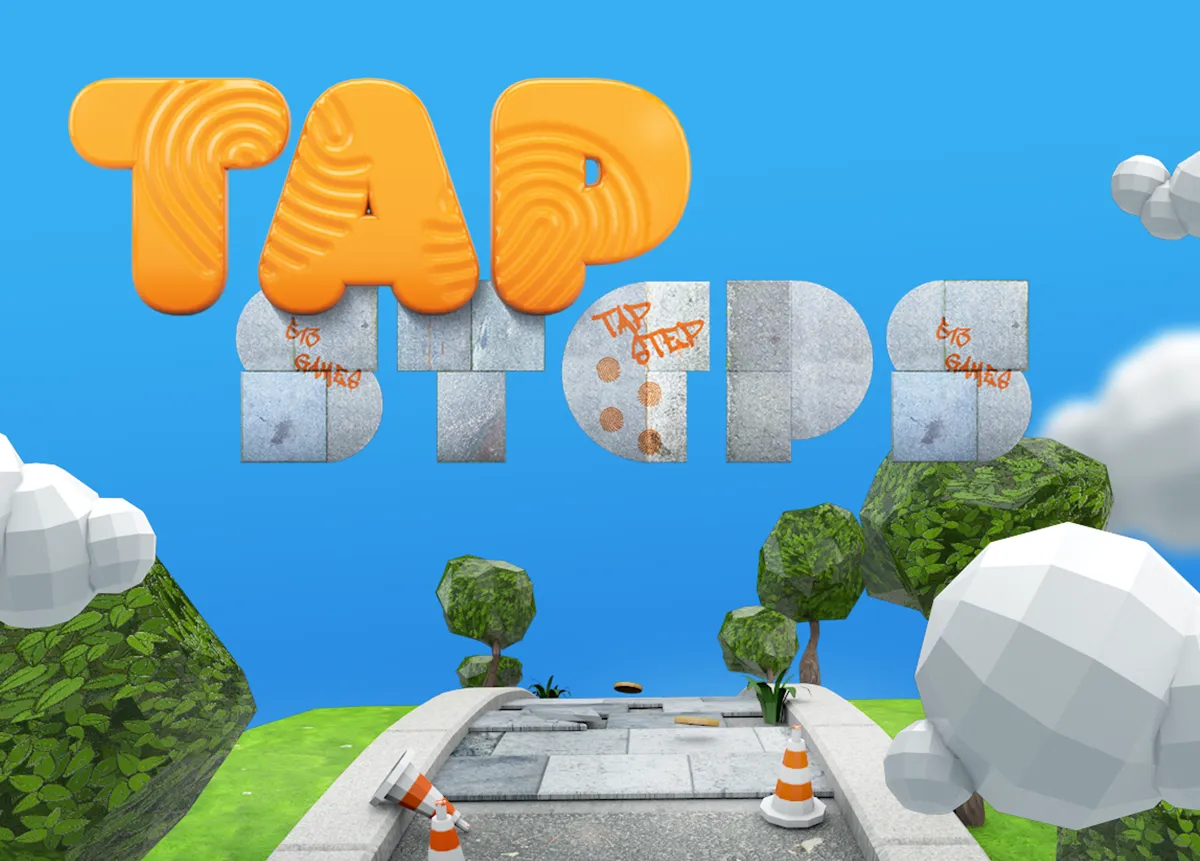
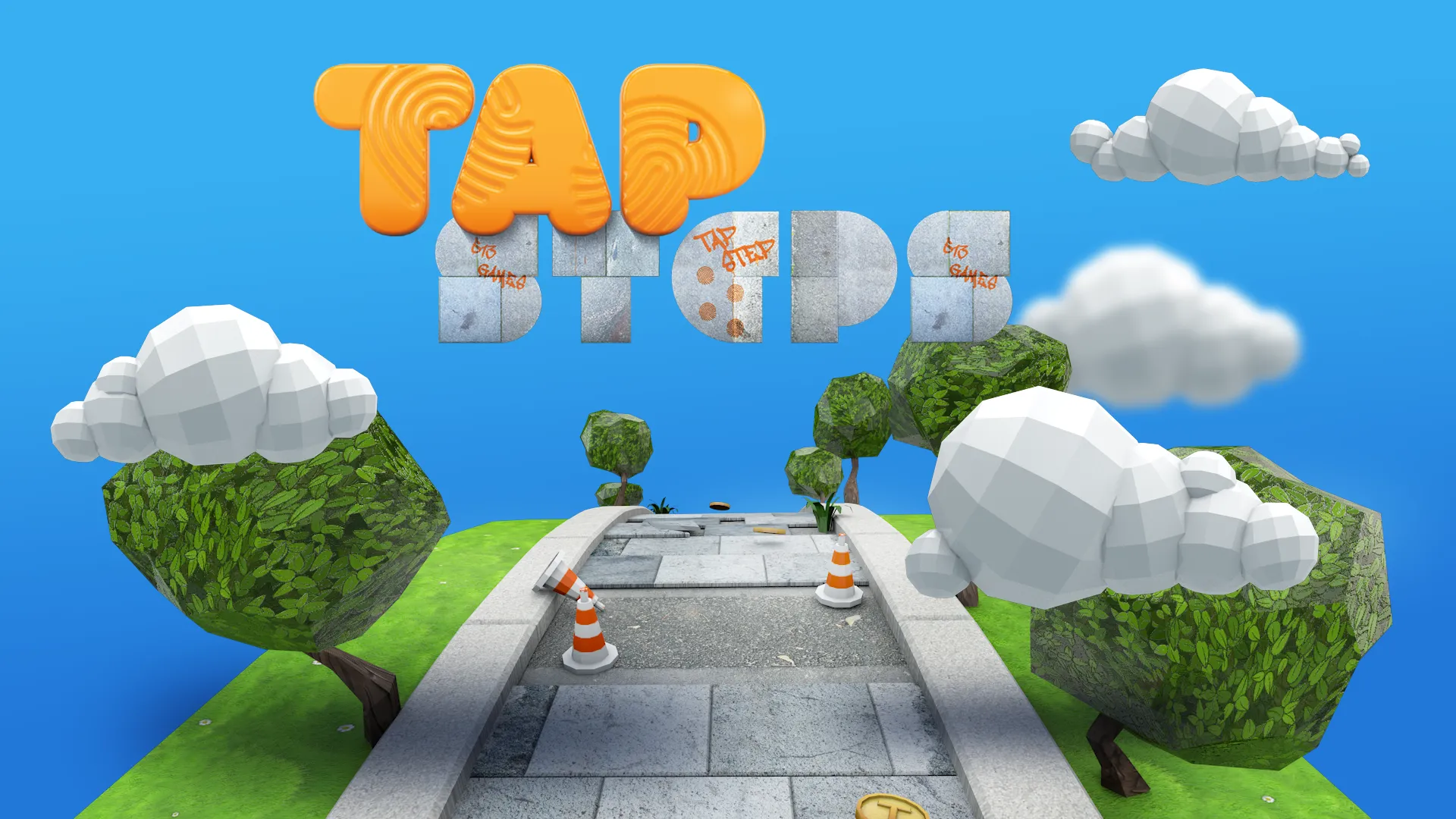
The core idea behind TapStep is to bridge authentic real-world nostalgia with intuitive mobile mechanics. Almost everyone remembers playing the subconscious game of avoiding cracks, tiles seams, and manholes while walking down the street. TapStep codifies this shared memory into a structured digital gameplay loop, turning pedestrian micro-behaviors into a gamified arcade run. The project explores how simple physical interactions—simulating two feet with two fingers—can yield high engagement, playful tension, and deep mechanical satisfying simplicity.
Scope of Work & Process
The core philosophy of TapStep rests on gamifying a universal human habit. Almost everyone has experienced the subconscious mental game of dodging pavement seams, manhole covers, and sidewalk imperfections while walking down the street. TapStep codifies this real-world reflex into a rhythmic mobile game where players use two fingers as virtual feet. By pairing organic movement mechanics with street-level hazards, collectible footwear, and rewarding progression systems, the project bridges nostalgic real-world behavior with satisfying arcade engagement.
Core Gameplay & Mechanics
Built around intuitive physical logic, TapStep translates real-world instincts into a dynamic arcade loop through rhythmic dual-finger controls and reactive hazard management.
-
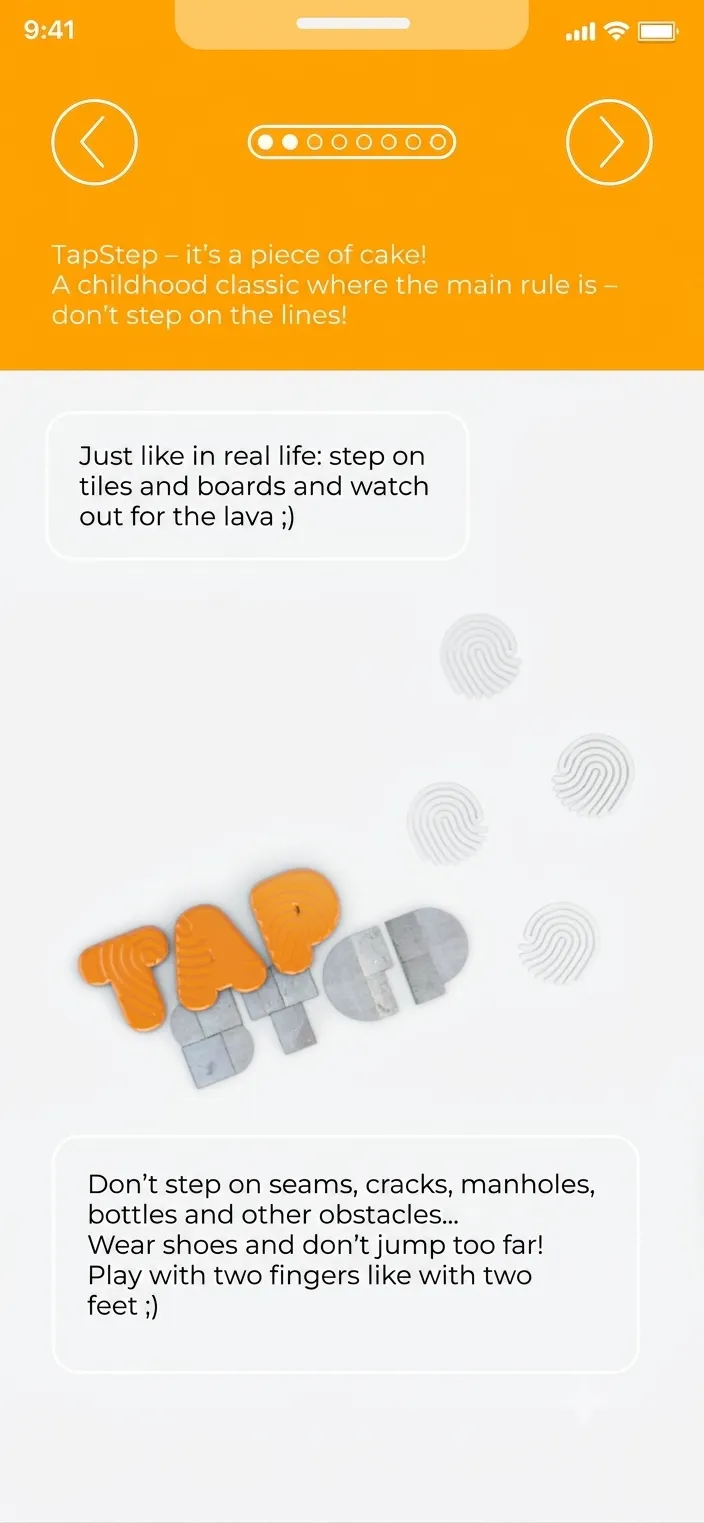
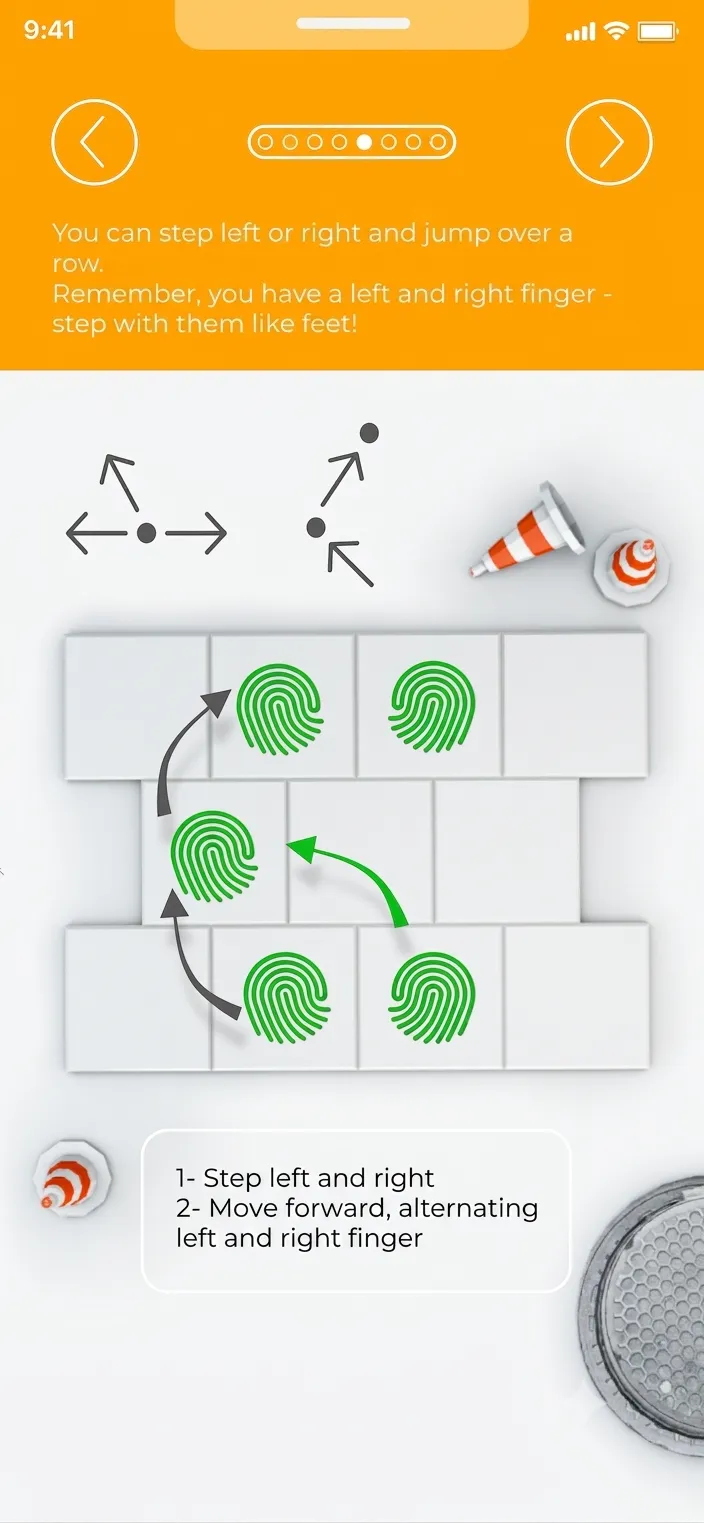
Dual-Finger Movement Logic: Players navigate forward by alternating their left and right fingers to simulate physical walking strides, requiring coordinated rhythm, spatial judgment, and precise tap placement.
-
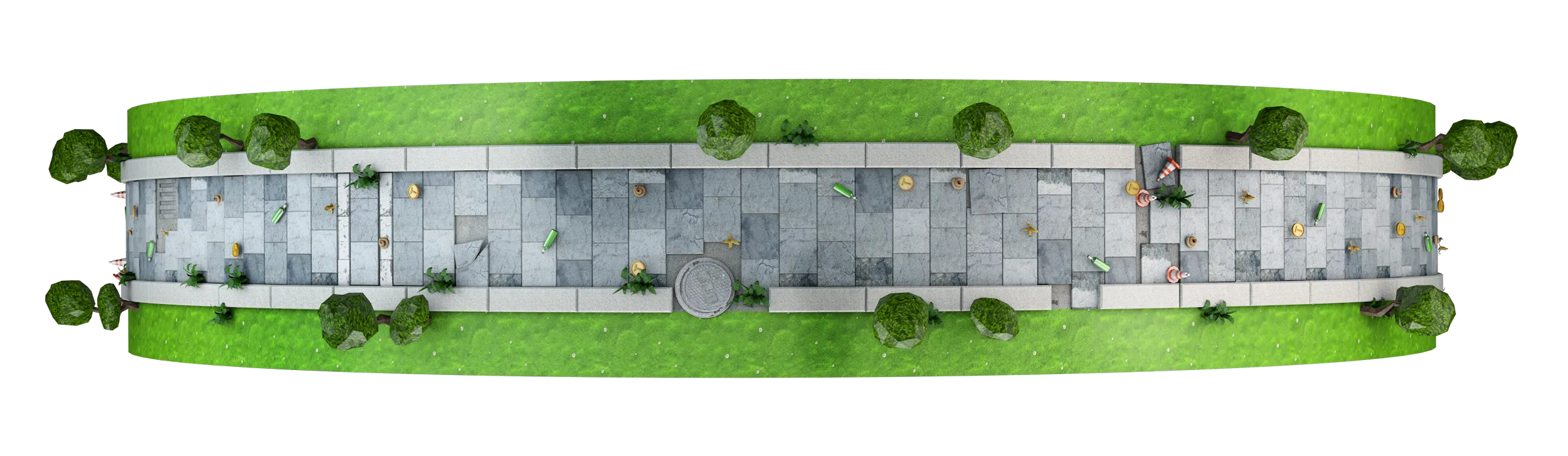
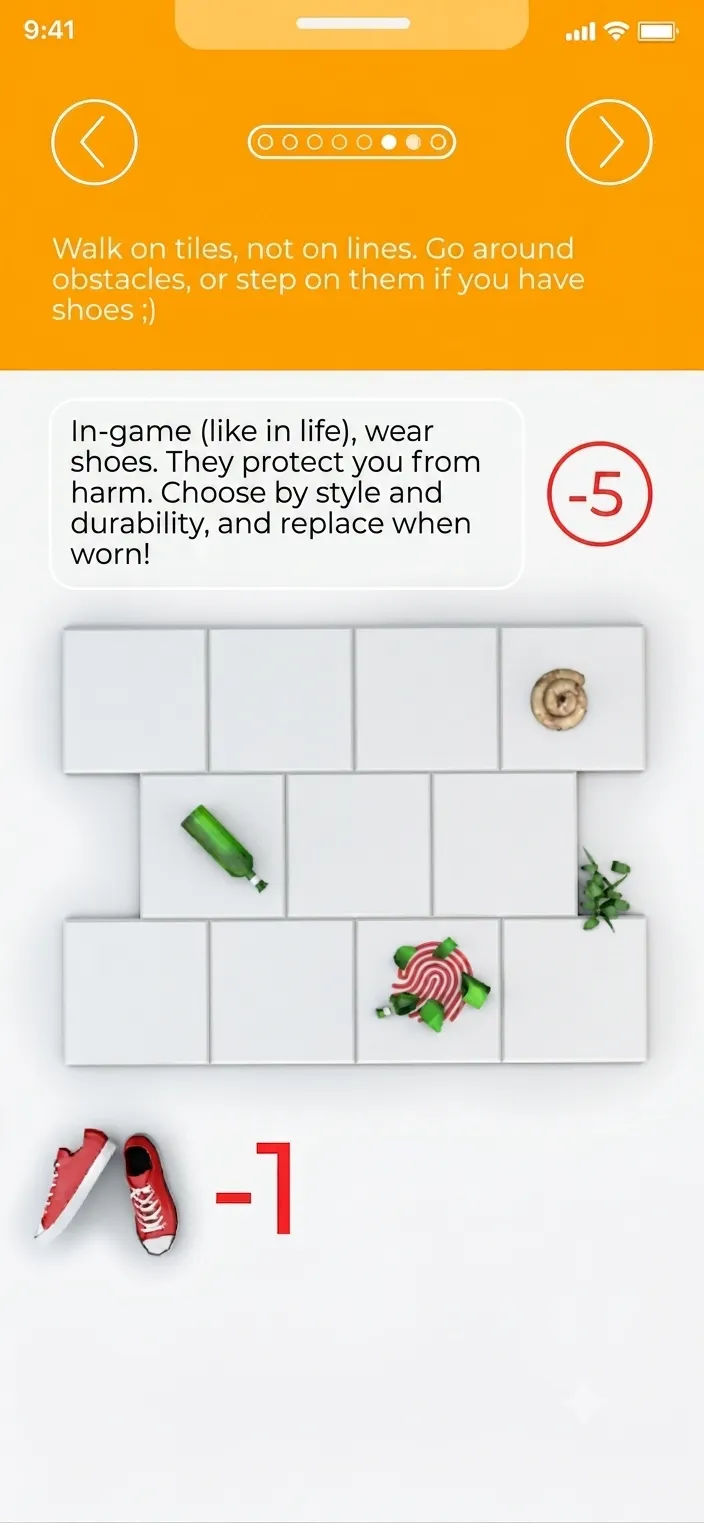
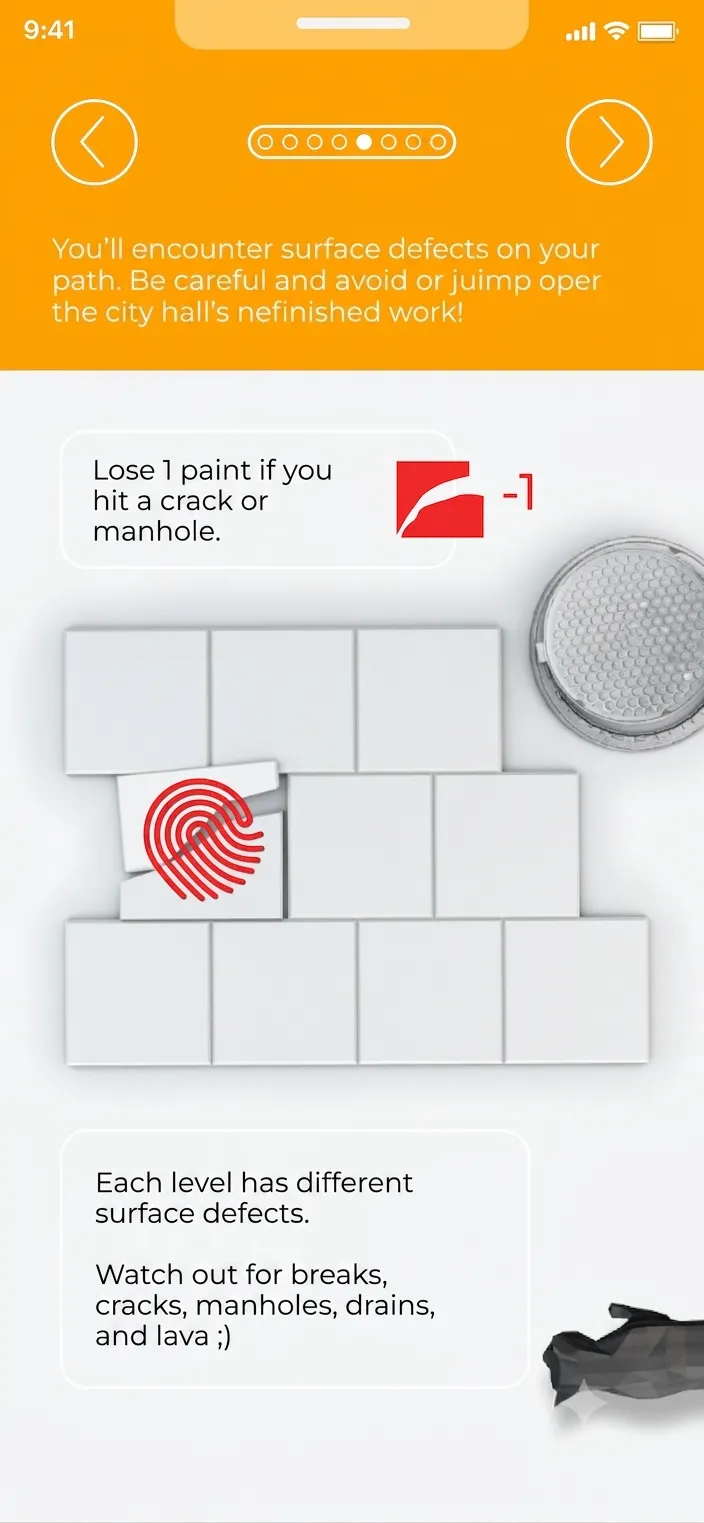
Surface Precision & Boundary Rules: Success depends on landing steps cleanly inside tile boundaries while actively avoiding line seams, cracks, open manholes, drainage grates, discarded bottles, and environmental hazards.
-
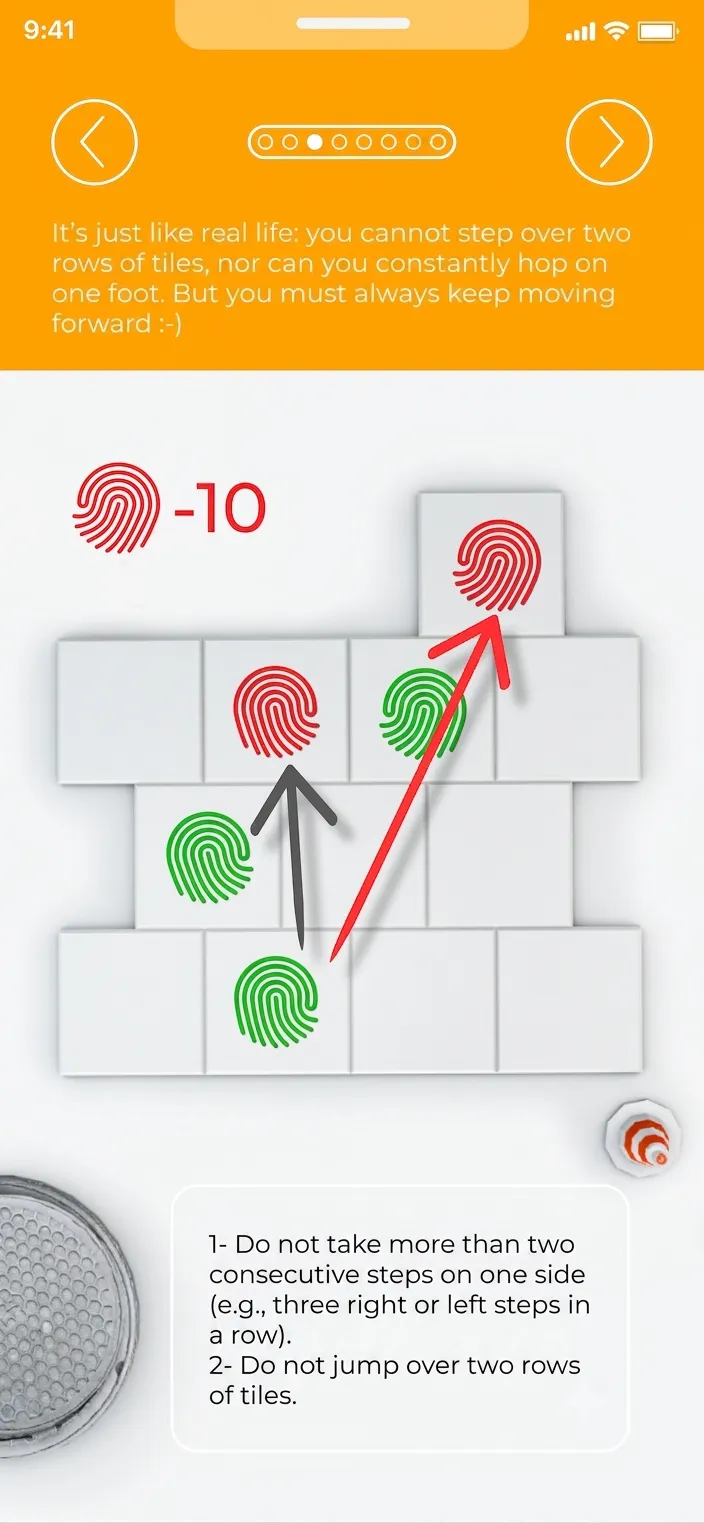
Stride Constraints & Penalty System: Movement follows natural walking rules, penalizing players for stepping on the same side more than twice consecutively, hopping across double tile rows, or violating stride cadence with point deductions up to -10.
-
Equipable Footwear & Durability Mechanics: Players can collect, unlock, and wear various stylish shoes that act as protective gear, absorbing damage from minor surface defects and wearing down progressively over extended runs.
-
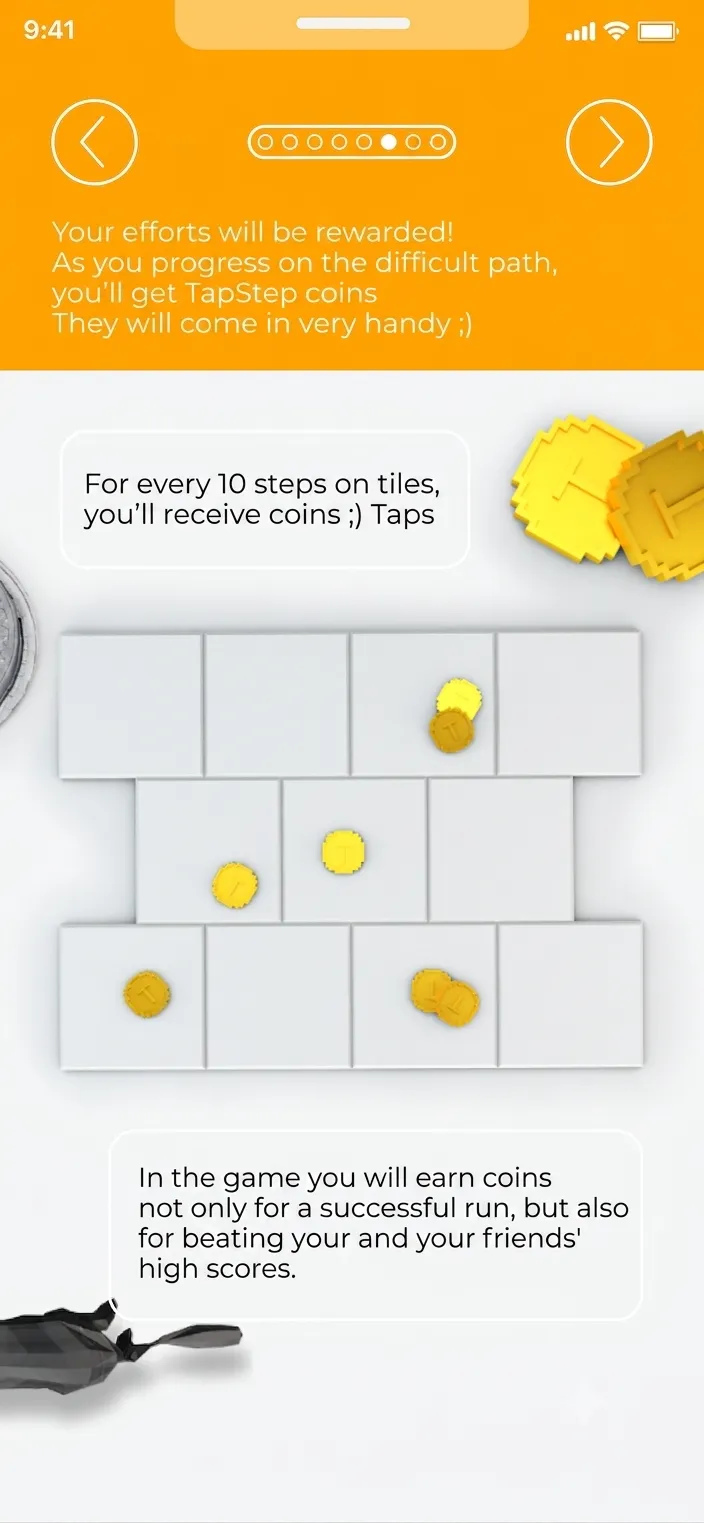
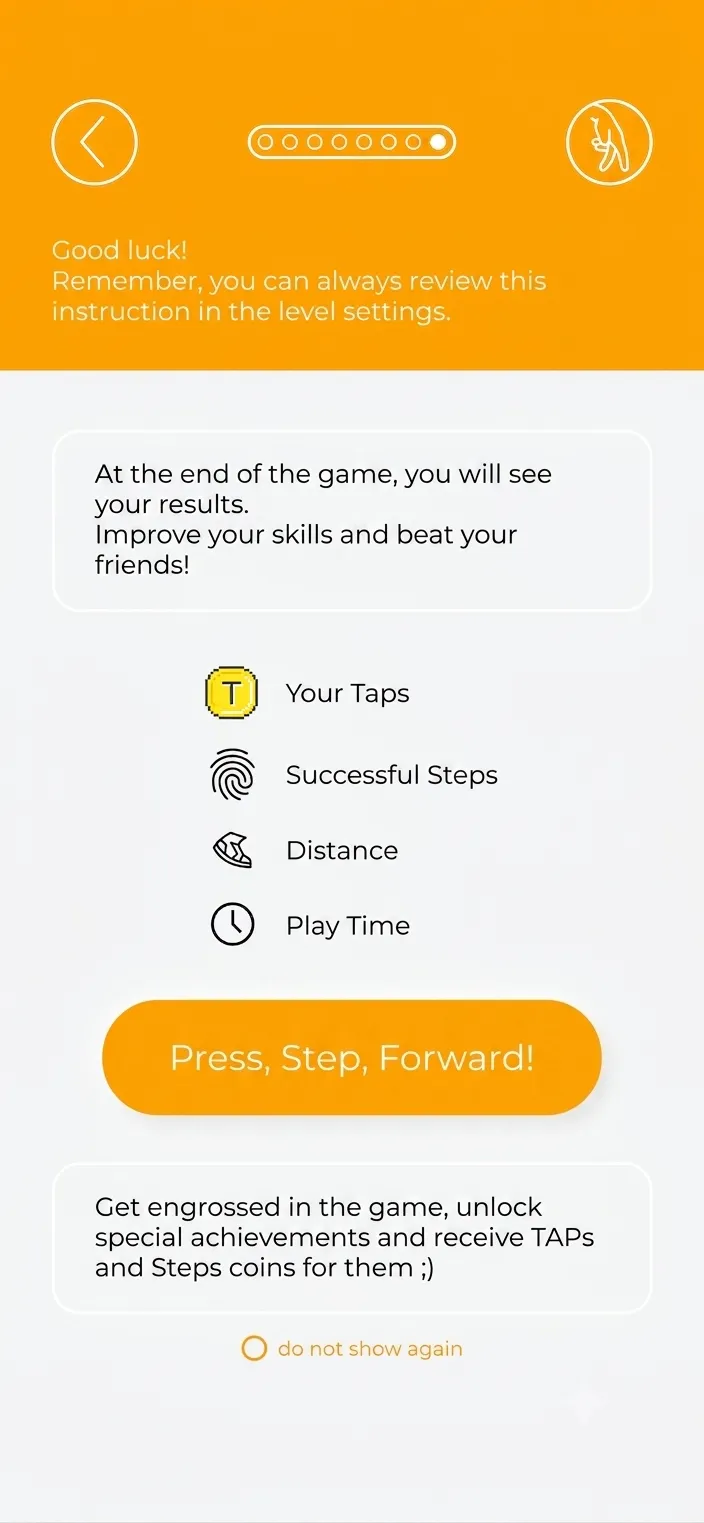
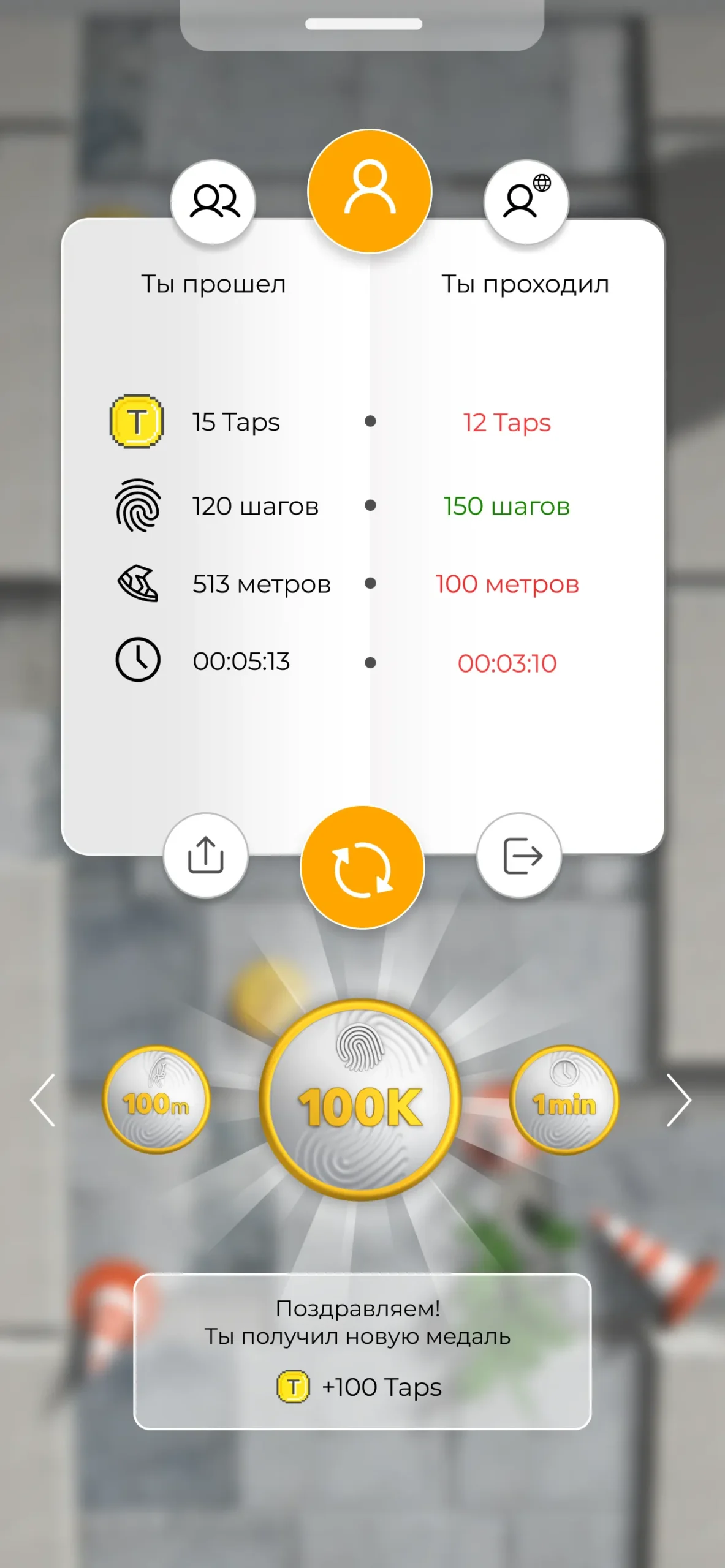
In-Game Economy & Progression: Players earn TapStep coins every 10 successful steps, along with bonus rewards for high accuracy, distance milestones, and completing special achievements or friend leaderboards.
Design, UI/UX & Solo Execution
Executed entirely from initial concept to final build, the project demonstrates a complete end-to-end design workflow—blending tactile 3D visuals, ergonomic UI systems, and cohesive aesthetic identity.
-
1Full-Cycle Solo Production: Managed 100% of the creative and technical pipeline independently—including game design architecture, mechanical balancing, high/low-poly 3D asset modeling, texturing, UX interaction design, and UI art direction.
-
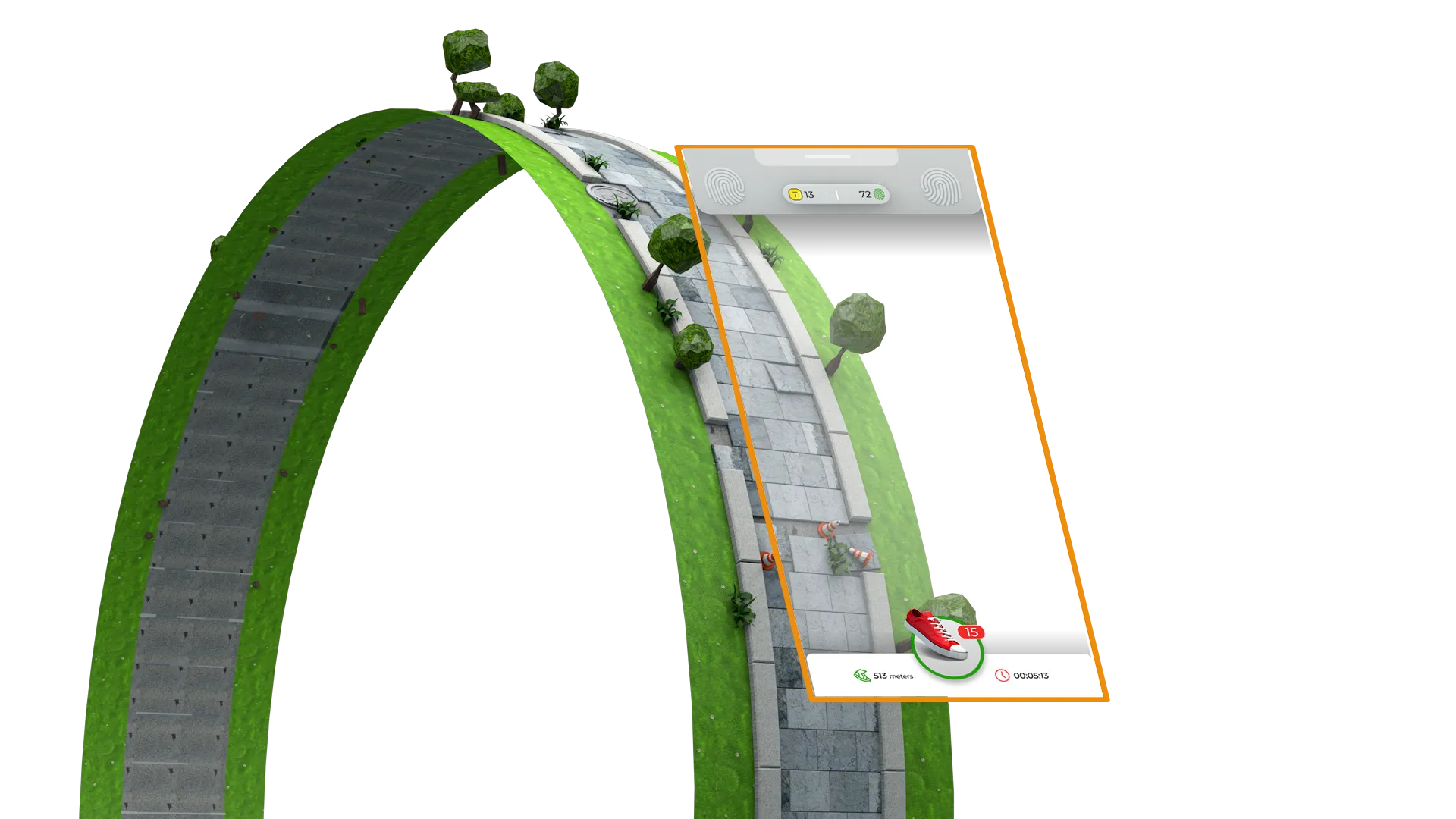
2Tactile 3D Environment & Asset Creation: Modeled and textured tactile 3D assets—such as concrete pavement tiles, asphalt surfaces, metallic manhole covers, traffic cones, and realistic shoe models—using optimized polycounts and natural material depth.
-
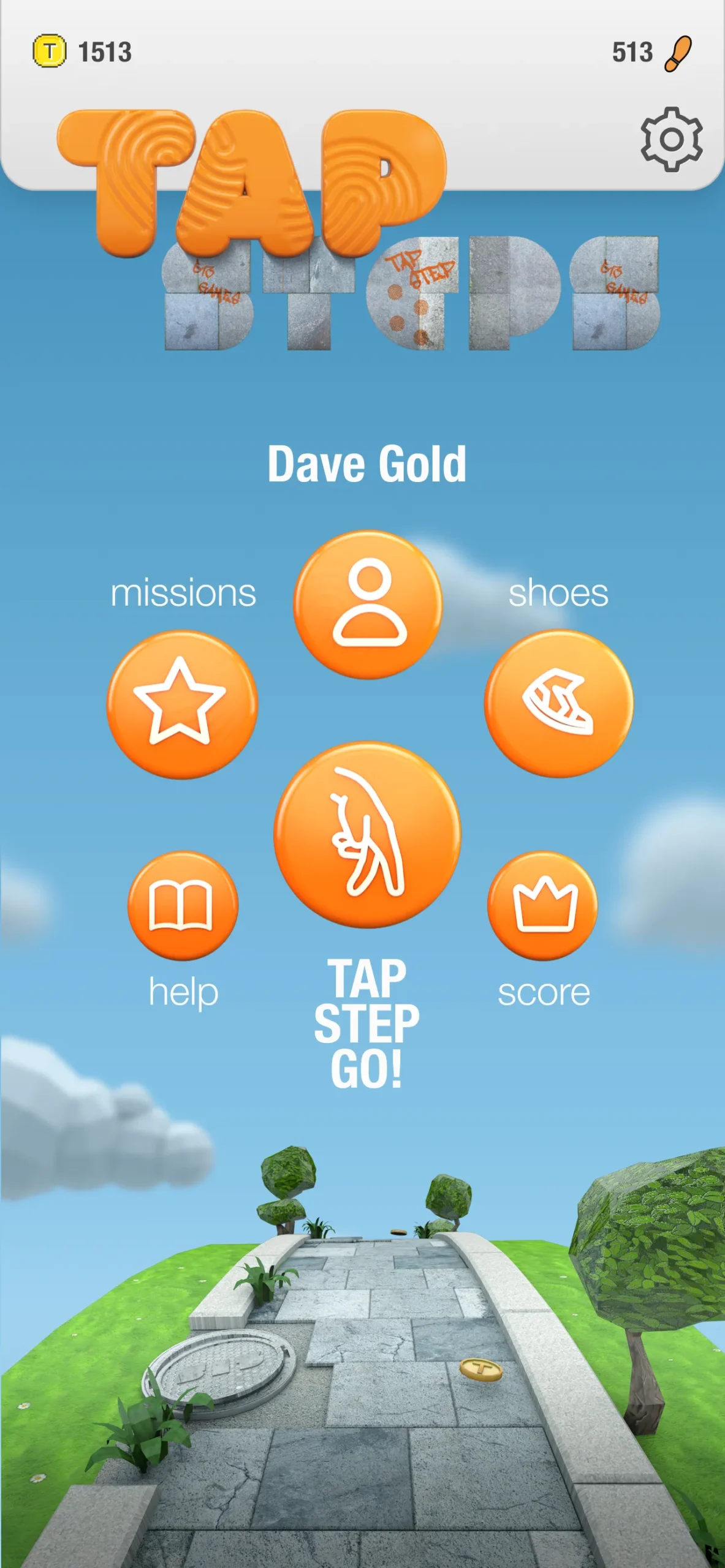
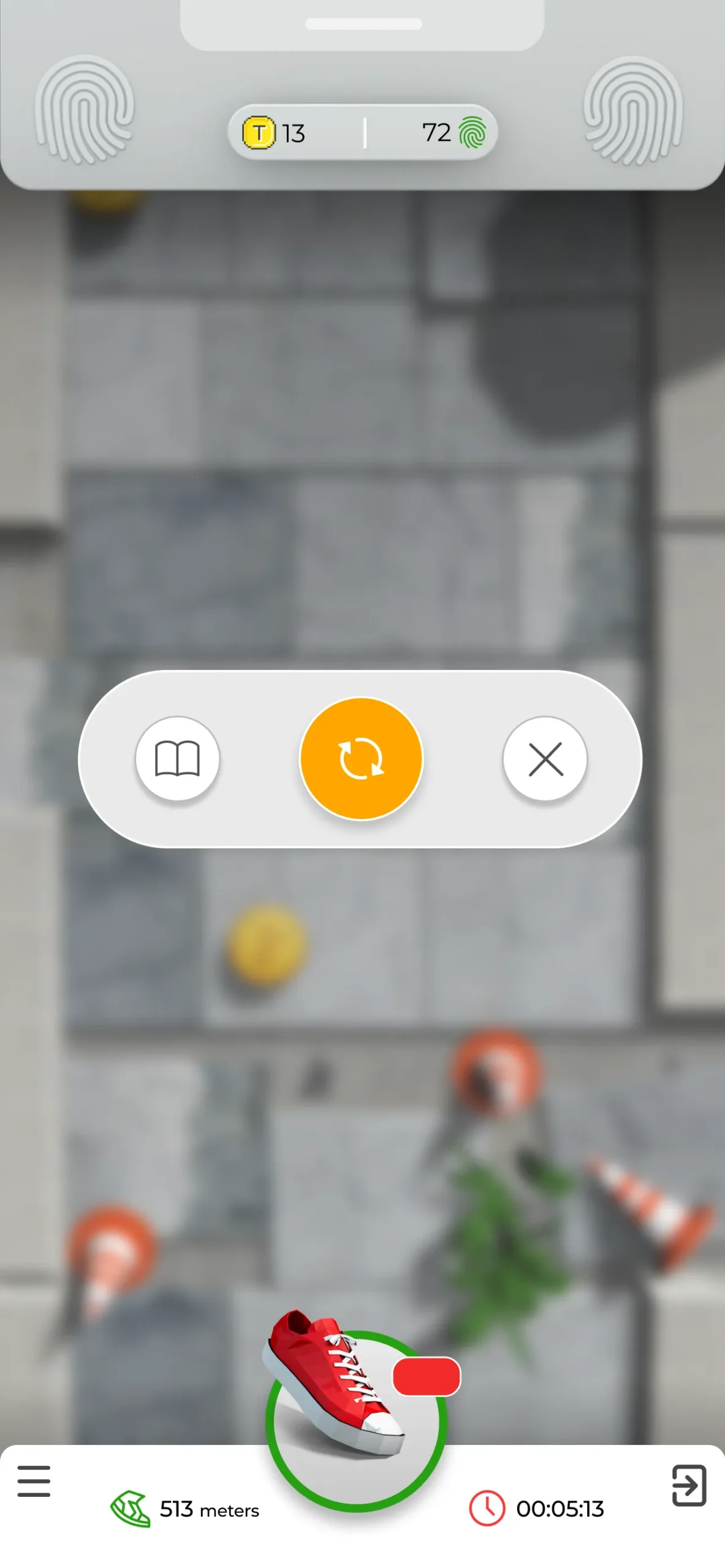
3Ergonomic & Intuitive UI Architecture: Structured a clear, accessible mobile interface tailored for two-handed touch interaction, featuring explicit fingerprint visual cues, directional vectors, overlay cards, and clean status indicators.
-
4Vibrant Brand & Visual Identity: Designed a distinct visual system defined by warm energetic yellow and orange tones, clean light backgrounds, custom 3D textured typography for the main title, and functional iconography.